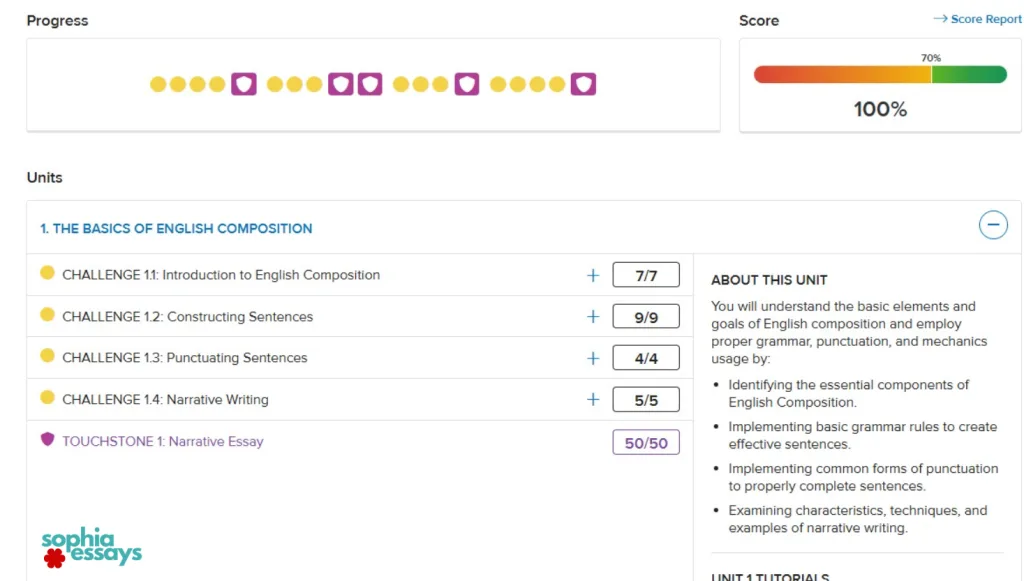
I hear the same thing from students over and over. The unit material felt fine. The readings made sense. Then the Touchstone showed up, and suddenly everything felt harder than it should. Students tell me they spend far more time and mental energy on a single Touchstone than they spent on the entire rest of the unit combined.
I’ve pulled patterns from hundreds of real student reports on r/SophiaLearning to figure out why this happens so consistently. This guide breaks down the real structural reasons behind that feeling, both the system itself and the psychology it triggers, and shows you exactly how to break the cycle.
You’re Not the Only One Struggling With This
If a Touchstone has ever made you feel like you were losing your mind over something that should be simple, you’re in good company.
One student described spending two full weeks stuck on a single Touchstone, second-guessing every sentence. When the grade finally came back at 100%, the realization hit them hard: they had massively overthought the whole thing from the start. That pattern shows up constantly across student threads. It’s not a rare story. It’s one of the most common experiences students share on Sophia touchstones.
Another student put it plainly on r/SophiaLearning: “The touchstones are absolutely wild. The first one, you’re like ‘Okay this is a little more difficult than average’ but the second and third?! Calm down.” I see this same pattern in comments again and again, especially in courses like Critical Thinking, Organizational Behavior, English Composition II, and several lab courses with written reports.
The gap between how hard a Touchstone actually is and how hard it feels is one of the most common complaints on the subreddit. That gap isn’t a sign something’s wrong with you. It’s a sign something specific about the system is causing it. The next few sections explain what that is.
Reason 1: The Rubric Is Both Extremely Specific and Surprisingly Vague
The most common reason Sophia Touchstones feel hard is the rubric itself. The touchstone rubrics might look precise on the surface. Specific criteria, specific point values, specific things a grader is supposedly checking for. Look closer, though, and words like “analysis,” “depth,” and “application” leave real room for interpretation. Two students can write genuinely solid responses and get different feedback on the exact same criterion, simply because “enough depth” means something slightly different to different graders.
I see this play out constantly. A student meets every literal requirement on the rubric and still gets their touchstone sent back, because the spirit of a specific criterion got judged differently than they expected. That’s not the student’s fault, and it’s not really the grader’s fault either. It’s what happens when a rubric tries to score something genuinely subjective, like depth of analysis, using language precise enough to look objective.
This creates a moving target. You can follow every instruction perfectly and still not know for certain whether your interpretation of “sufficient analysis” matches the grader’s interpretation, and that uncertainty alone makes the assignment feel far harder than a clear, purely factual task ever would.
Reason 2: Overthinking Is Almost Inevitable, and the System Encourages It
Many students report spending one to two weeks on a single Touchstone, only to realize after scoring highly that they had significantly overthought the requirements.
One Touchstone can delay an entire course if it comes back for revision. That raises the stakes in your mind, even when the assignment isn’t objectively hard. And when you submit it and wait several days for a grade. During that wait, you get zero feedback. You have nothing to check yourself against, so your mind fills that gap with worry instead. That combination is a perfect setup for perfectionism.
I’ve read dozens of posts where students describe refining the same draft for days, rewriting a paragraph five separate times, convinced something was fundamentally wrong. Then the grade comes back high, and they realize a solid, rubric-aligned version would have passed just fine on the first try.
In most courses, you can’t move to the next Touchstone until the current one gets graded. That locked door sits in the back of your mind while you’re writing, and it turns a normal assignment into something that feels like it’s blocking your entire path forward. Anxiety builds under that pressure, and anxiety feeds overthinking directly.
Reason 3: Formatting, Originality Checks, and Technical Traps
Technical issues such as formatting and originality flags regularly cause returns, even when the academic content is solid. I’ve seen this catch strong writers off guard again and again.
Small details trip up otherwise excellent submissions. Wrong spacing. The wrong font. A missing title page. An unexpected file type. None of these have anything to do with whether the ideas inside the paper are good, yet any single one can send a Touchstone straight back.
Citation format catches students too, sometimes in ways that feel unfair. Missing quotation marks around a direct quote. A citation style that’s slightly off from what the course expects. These feel like small slips, and yet they still count.
Originality checks add another layer of stress. Sophia runs every Touchstone through a plagiarism system. I’ve seen properly cited material get flagged just because the wording sat too close to a source. Sometimes a student did everything right and still gets flagged out of nowhere.
I understand why this can sometimes feel punitive instead of educational. You did the actual academic work. The idea was sound. Then a technical detail, something that has nothing to do with your understanding of the material, sends the whole thing back anyway.
Reason 4: Grader Variability and the Waiting Game
Different graders read the same rubric differently, which creates real confusion for students who did nothing wrong.
Two students submit similar work on the same Touchstone. One gets glowing feedback. The other gets sent back for “insufficient depth” on a section that reads almost identically. Sophia’s graders aren’t being careless here. Grading anything subjective, like analysis or argument quality, always involves some human judgment. That judgment varies from person to person, no matter how detailed the rubric is.
Wait times make this worse. Grading can stretch several business days, sometimes longer during busy periods. During that wait, a student has nothing to do but wonder. Did I miss something? Was my thesis actually clear? That silence gives doubt plenty of room to grow.
By the time feedback finally arrives, a single assignment has turned into something much bigger than it should be. What started as one piece of writing becomes a multi-week emotional weight, tangled up with anxiety, second-guessing, and a growing fear that something’s fundamentally wrong with your approach, when usually nothing is.
Reason 5: The Gap Between Course Content and Touchstone Expectations
In a lot of courses, the unit material itself feels manageable. Then the Touchstone shows up asking for something the challenges never really prepared you for.
I see this gap constantly in specific courses. For example, Organizational Behavior’s earlier material stays fairly straightforward, then a Touchstone suddenly demands a full case analysis with an organizational diagram, a completely different skill than anything the reading covered. Critical Thinking follows a similar pattern. The lecture content feels approachable, and then a Touchstone asks for structured, abstract logical analysis that many students aren’t prepared for.
English Composition II shows this gap too. Students expect the writing to be the hard part. It usually isn’t. What actually takes the most time is the sequence: each Touchstone waits on the one before it.
Science labs share this same mismatch. Reading about a concept feels clear enough. Then a Touchstone asks for a full analytical report built on data you collected yourself, synthesizing everything into a genuine scientific argument.
This mismatch between what a course teaches and what its Touchstone demands is exactly why so many students feel blindsided. The jump from practice to actual performance is bigger than the course structure lets on.
How to Make Touchstones Feel and Actually Be Much Easier
I use the same five-step system with every student I work with, and it consistently cuts down both the time and the stress a Touchstone takes.
Here is my 5-step system:
Map every rubric criterion before you write a single sentence. Open the rubric next to a blank document. For each row, write down exactly which part of your response will address it. This turns a vague, subjective target into something concrete you can actually check off.
Treat your first draft as “good enough for the rubric,”. Don’t aim for perfect. A rubric-aligned draft that covers every criterion clearly will pass. Chasing a flawless version instead of a solid one is where the overthinking spiral usually begins.
Run a strict technical checklist before you submit. Spacing, font, citations, file type, required sections, all of it. This two-minute habit prevents the exact kind of technical return covered in Reason 3.
Submit earlier instead of polishing endlessly. A solid draft submitted today beats a marginally better draft submitted after five extra days of rewriting the same paragraph. The improvement from that extra polishing is usually smaller than it feels in the moment.
Use feedback from one Touchstone to improve the next. If a grader flags something specific, apply that exact lesson to your next submission right away, instead of starting from zero every time.
Where This Gap Shows Up Most, Course by Course
A few courses show up again and again in student reports:
English Composition II and Workplace Writing. These courses stack several Touchstones back to back. Each one waits on the last, so the pressure builds fast. A single slow grading cycle can hold up the entire course.
Critical Thinking. In this course, most students don’t expect the symbolic logic section. The course starts out feeling conversational, then this section drops in like a different subject entirely. Students spend the first few units reading and discussing ideas. Then they suddenly have to work through formal logic notation.
Organizational Behavior. Case study depth and the required organizational diagrams ask for a level of applied analysis most students haven’t practiced recently. You’re not just describing a situation. You’re breaking down structure, behavior, and outcomes, then showing the connections visually.
Public Speaking. Recording yourself on video triggers real anxiety for a lot of students. The format itself is forgiving. You get multiple takes and full editing control. For this course, however, the anxiety comes from being on camera, not from the actual difficulty of the assignment.
Lab courses. Turning collected data into a genuine analytical report is a different skill from reading about a concept. Students often feel confident through the readings. Then they get stuck when asked to interpret their own results and build an argument from scratch.
When the Difficulty Crosses into “I Need Help” Territory
Most students can work through this alone once they understand the five reasons above. Get help if you run into one of these moments below.
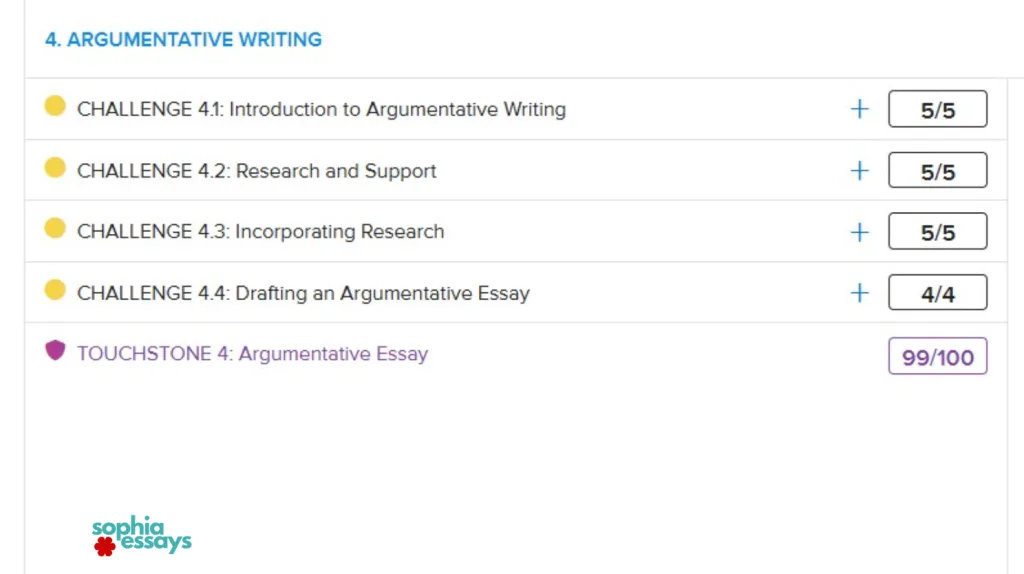
If you’ve already had a Touchstone returned once, and you’re not sure why, don’t just resubmit. Resubmitting without understanding the real gap risks the same mistake again. At SophiaEssays, we review it against the rubric and help you rewrite it. Here’s an example of a revised Touchstone that went from a return to a clear pass:
If you’re stuck in the overthinking loop for several days, rewriting the same section without real progress, that’s a clear sign to stop and get a second opinion. We help students turn repeated revisions into first-try approvals on exactly these kinds of Touchstones.
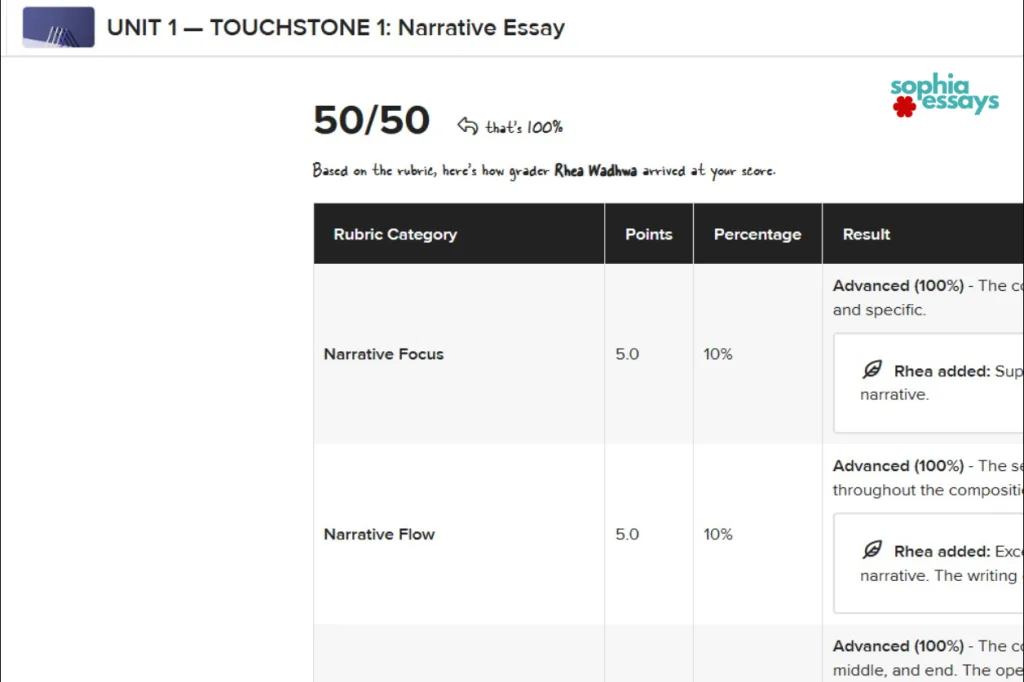
A quick check before you submit costs far less time than a full revision cycle after a return. Waiting until you’re already stuck just makes the fix take longer.
What This All Comes Down To
Touchstones exist to show applied understanding. They aren’t trick questions, and they aren’t designed to punish you.
Most of what makes this hard isn’t the material itself. It comes down to rubric ambiguity, high stakes being tied to one assignment, delayed feedback, and the overthinking that naturally follows. Once you separate the real difficulty of the material from the anxiety the system creates around it, Touchstones stop feeling impossible and start feeling like exactly what they are: a normal part of demonstrating what you already know.
Frequently Asked Questions
Why do so many people overthink Sophia Touchstones?
High stakes and delayed feedback combine to create this pattern. One Touchstone can block your next assignment, and a multi-day grading wait gives your mind plenty of room to fill with doubt before you even know if there was a problem.
Are some graders stricter than others?
Yes, and this is a normal part of any system that grades subjective work like analysis or argument quality. Two graders can read the same rubric slightly differently, which is exactly why mapping your response directly to the rubric’s language matters so much.
How long should a Touchstone actually take?
Most Touchstones are built to take a few focused hours to a day or two of real work, depending on length and course. If you find yourself spending a full week or more on one assignment, that’s usually a sign of the overthinking loop, not a sign the assignment itself is genuinely that demanding.
Can formatting alone get a Touchstone returned?
Yes, and it happens often. Wrong spacing, an incorrect font, or the wrong file type can trigger a return before a grader even fully reviews your content, regardless of how strong your actual writing is.
What’s the fastest way to stop the overthinking cycle?
Set a firm deadline for yourself and submit once your draft clearly hits every rubric criterion. Waiting for a feeling of perfection, instead of confirming rubric alignment directly, is exactly what keeps the cycle going.
Conclusion
The feeling that Sophia Touchstones are harder than they should be is real, and it’s incredibly common. Ambiguous rubric language, sequential grading delays, technical traps, grader variability, and the natural overthinking that follows all combine to create that feeling, far more than the actual academic demand does on its own.
Once you understand these five reasons, a simple rubric-first process changes everything. Map your response to the rubric before you write, submit a solid draft instead of chasing perfection, and use feedback from each Touchstone to improve the next one.
If you’re currently stuck on a Touchstone, or you want a second pair of eyes before you submit, we specialize in helping students get through exactly the courses and assignments that cause the most friction.
